Since 2013, working across Bournemouth, Poole, and the rest of Dorset, I’ve been on Victorian slates in Boscombe, concrete tiles in Winton, old clay on properties in Westbourne, flat felts over extensions in Canford Cliffs. Different ages, different materials, different conditions. You build up a feel for what roofs can and can’t take.
And in all that time, over a decade of this work, I have never once cleaned a roof with a pressure washer.
Why Pressure Washing Is Everywhere (and Why That Doesn’t Make It Right)
There’s a reason pressure washing roof videos do well online. It looks incredible. You drag the lance across a moss-covered tile and a strip of clean grey appears behind it. Instant, visual, satisfying. The before-and-after contrast is dramatic, and it photographs beautifully.
That’s the appeal, and it’s real. I understand it.
The problem is that what makes it look impressive on camera is the same thing that makes it damaging in practice: raw force applied to a surface that was never designed to receive it.
A pressure washer running at the sort of output needed to shift established moss and lichen from roof tiles, typically somewhere between 1,500 and 3,000 PSI, is not a cleaning tool at that point. The question is how much damage happens before you’re done, and whether you’ll be able to see it easily once the work is finished.
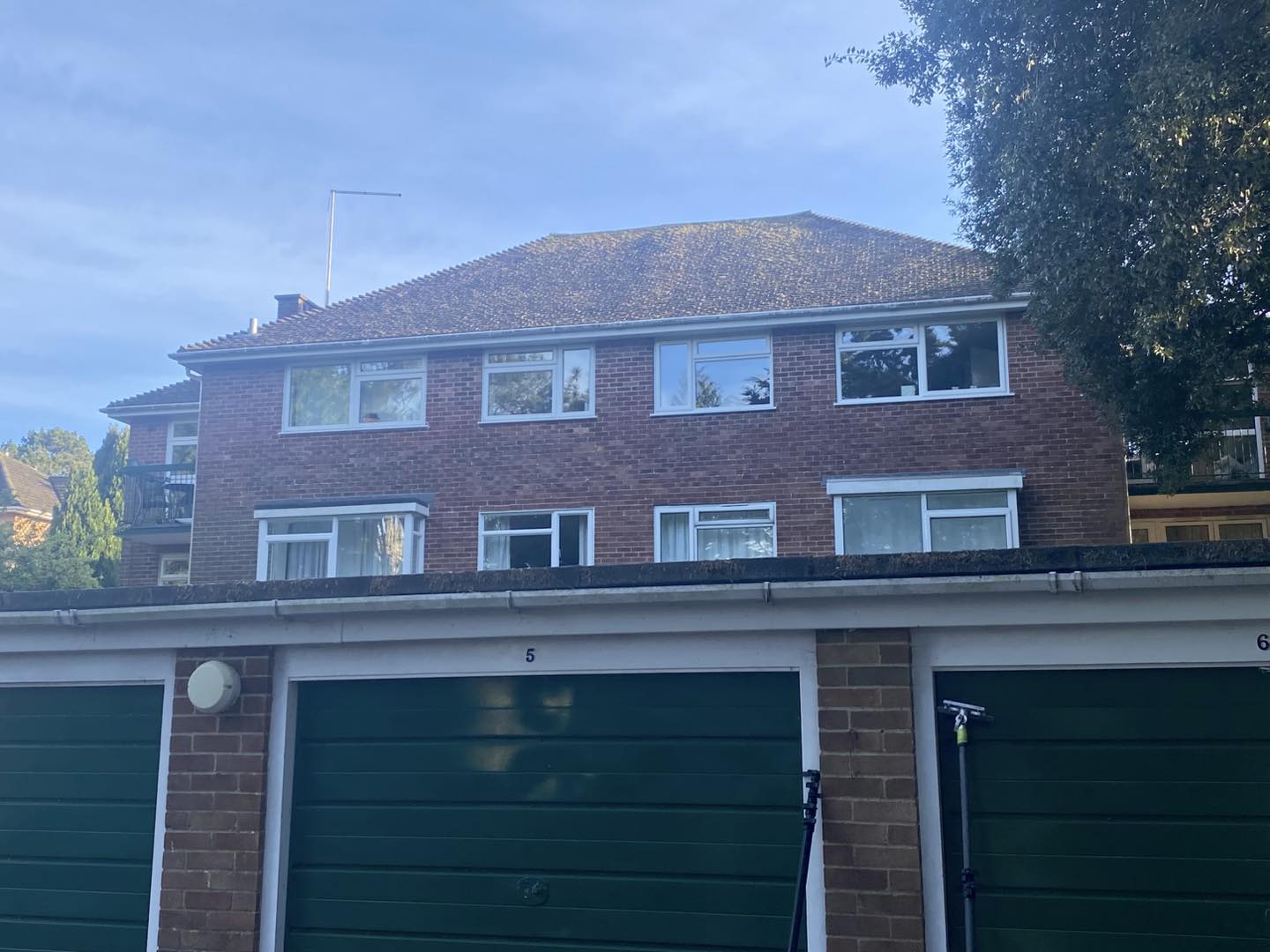
What a Pressure Washer Actually Does to a Roof Tile
Let me be specific, because vague warnings about “potential damage” aren’t useful.
On Concrete Tiles
A concrete tile has a textured surface. That texture serves a purpose: it helps water sheet off the tile cleanly, it gives the tile structural integrity in its outer layer, and it provides a key for any sealant or coating to bond to. Pressure washing strips that surface texture. You’re essentially taking the top layer off the tile.
The result isn’t always visible immediately and that’s part of the problem. But once that outer layer is gone, you’ve exposed a more porous substrate. Water absorption increases. Freeze-thaw cycles in winter accelerate the degradation. Micro-cracks form and gradually widen. What looked clean and bright after the job starts to absorb staining faster than it did before.
I’ve quoted jobs where homeowners were puzzled that their roof looked worse three years after a professional clean than it did before one. This is why.
On Clay Tiles
Original clay tiles, the kind you find on late Victorian and Edwardian properties, which are common across Charminster, Moordown, Pokesdown, and plenty of older Bournemouth streets, are more porous than modern equivalents by design. They were fired at lower temperatures than contemporary tiles. And many of them are now well over a century old. They’ve survived because they’ve been allowed to do their job undisturbed.
High-pressure water forces its way into the microstructure of the tile. It loosens the bond between the surface and the body of the tile. And crucially, it pushes water under the tile and into the batten below. You clean the surface and simultaneously soak the structure underneath.
On Natural Slate
Slate’s property makes it vulnerable to high-pressure water applied at close range.
The water finds those planes and works into them. Over time, with repeated exposure to water penetration and seasonal temperature change, the slate begins to delaminate. The surface lifts, the tile weakens, and eventually it fails. Delaminated slate can’t be repaired. It needs replacing.
For properties in Bournemouth with original slate roofs this is a serious concern. Old slate that has lasted since the 1890s can be undone by a morning’s work with the wrong equipment.
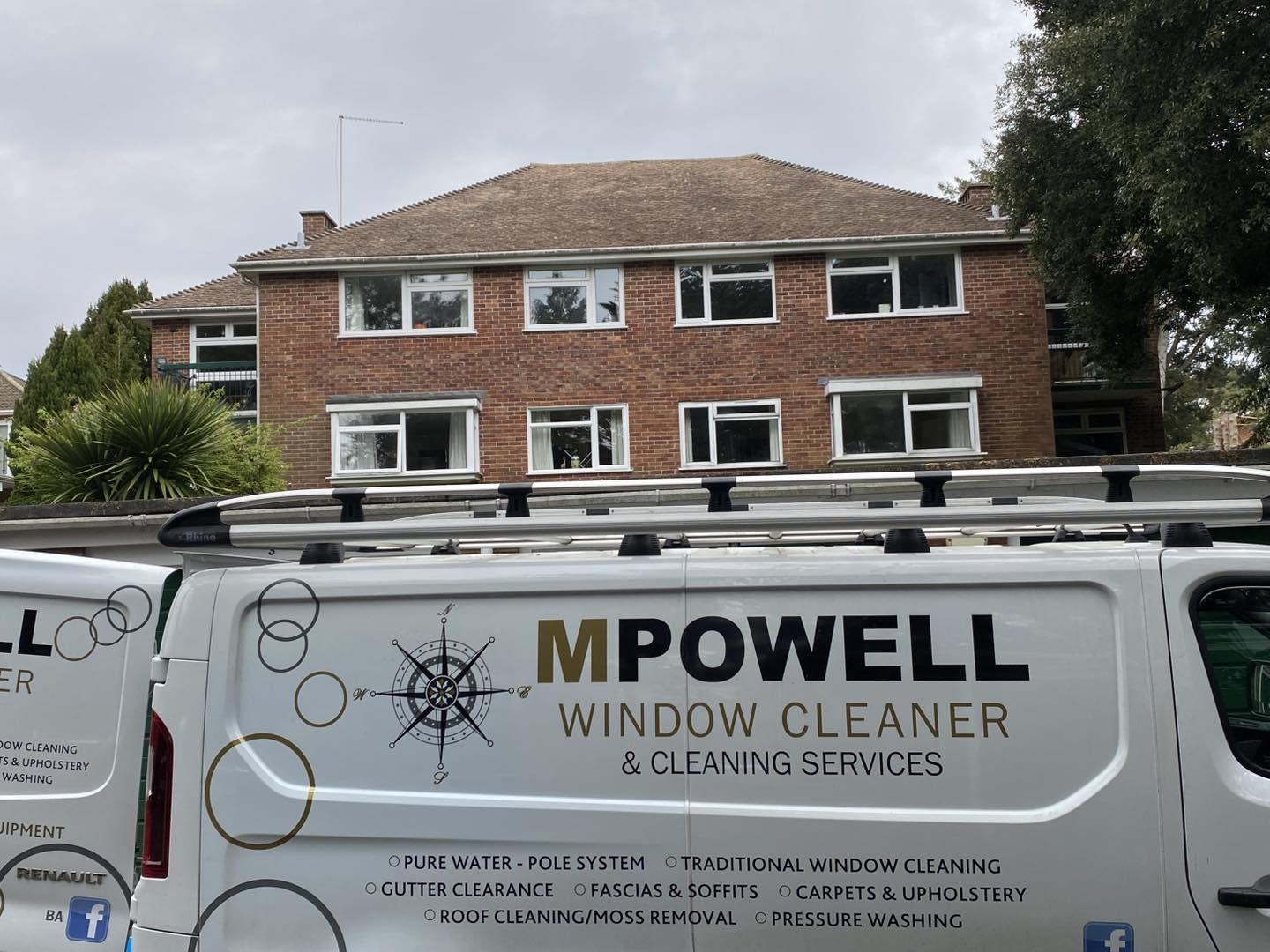
On Ridge Tile Pointing
This one often gets overlooked in conversations about pressure washing damage, but ridge tile pointing is frequently the first thing to go. The mortar that beds and points your ridge tiles is already exposed to weathering, and on older properties, it can be in a fragile state even before anyone goes up there. A pressure lance directed near ridge tiles, or even the movement of water and debris down the roof, can dislodge mortar that was already compromised.
Loose ridge tiles are a problem. If a tile shifts during heavy wind or rain, it can expose the roof to water ingress at the highest point, the worst possible place for it to happen.
Specific Challenge of Bournemouth and Dorset Roofs
Bournemouth sits on the coast. Coastal air carries moisture and fine salt particles that don’t make it far inland in most of England, but are very much present here. Those particles settle on roof surfaces and act as nuclei for biological growth. Algae, moss, and lichen establish themselves faster on coastal roofs than on equivalent properties twenty miles inland.
The result is that Bournemouth homeowners are dealing with more aggressive biological growth on roofs. Victorian and Edwardian housing stock makes up a significant proportion of the residential property in areas like Westbourne, Boscombe, Southbourne, and the older parts of Poole. These are properties built with materials that have age, character, and genuine fragility.
Applying the same method to a 1920s clay-tiled semi in Boscombe that you’d use on a 2010 new-build in Christchurch is not appropriate. They are different roofs with different tolerances, and a good roof cleaner treats them differently.
How Softwash Works (and Why It’s Actually a Better Fit for the Problem)
Moss, algae, and lichen are biological organisms. They grow, they feed, they colonise. If you want to clean a roof properly, meaning it stays clean rather than just looking clean immediately, you need to address the biology, apart from appearance.
Softwash does this.
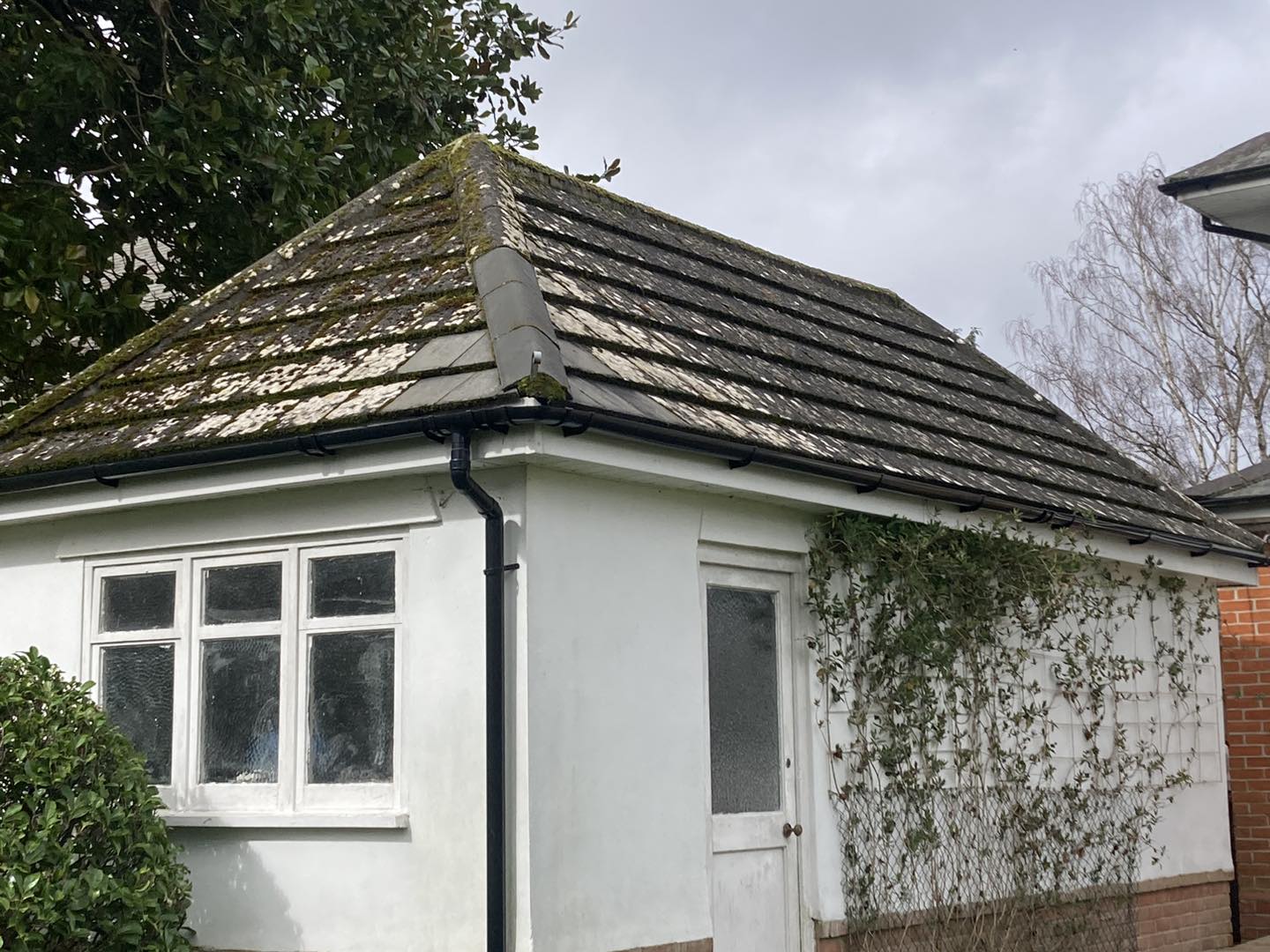
Softwash method uses a low-pressure application (typically well below 100 PSI — this is comparable to a garden hose) to deliver a diluted biocidal solution across the roof surface. The active compound works into the root structure of moss and the cell membranes of algae and lichen, killing them at the source rather than scraping off the visible surface while leaving the roots behind.
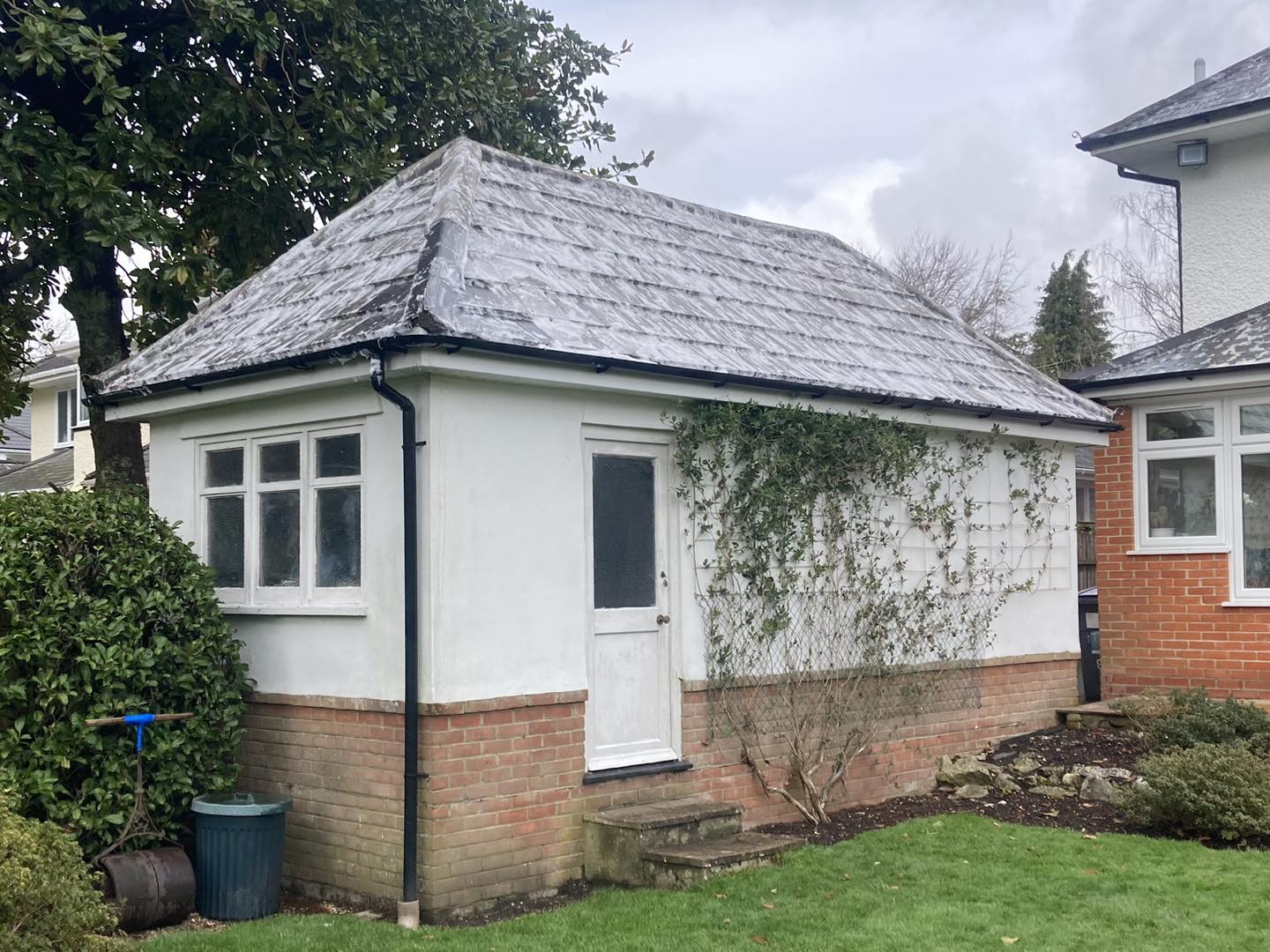
The treatment takes time to complete its work. Over the weeks following a softwash clean, dead biological matter breaks down and washes away naturally with rainfall. Most customers notice their roof continuing to improve for six to eight weeks after the job is done. This surprises people who expect cleaning to be an immediate, single-event result.
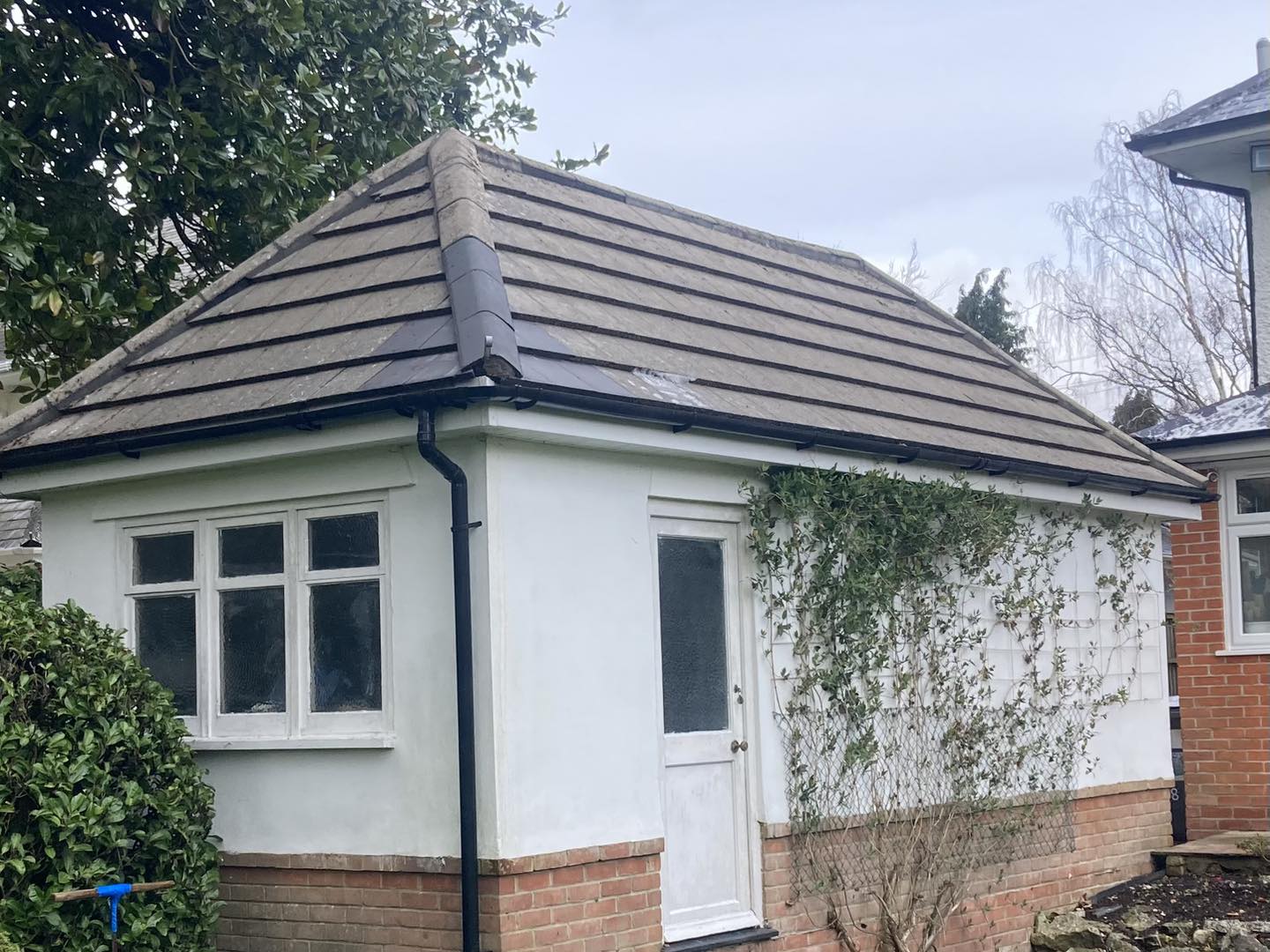
The low pressure means the tile surface is unaffected. Aggregate is not stripped, and mortar is also not disturbed. The roof is cleaner at a structural level and the biocidal residue that remains after treatment continues to suppress regrowth for considerably longer than any mechanical cleaning method can achieve.
The Regrowth Question
This is where softwash makes the strongest case for itself, and it’s the comparison most homeowners don’t get to make because they don’t see their roof again for a few years.
A pressure-washed roof can look excellent for a year, perhaps eighteen months. But because the organism’s root structure wasn’t killed, regrowth tends to return relatively quickly. Some of that growth is accelerated because the stripped tile surface is now more porous and absorbent than it was before.
A properly softwashed roof treated with an appropriate biocide typically stays cleaner for four to six years in Dorset conditions. On well-exposed, south-facing roofs with limited overhanging vegetation, some of our customers have stretched beyond that. On north-facing roofs near trees, the shorter end of that range is more realistic.
The practical difference in cost is significant when you think about it over a ten-year period. Two or three softwash cleans at four-to-six-year intervals versus five or more pressure wash visits at eighteen-month intervals. The latter approach costs more in total, does more cumulative damage to the roof, and you’re perpetually dealing with a visible moss problem rather than a managed one.
“But I’ve Seen Pressure Washing and the Roof Was Fine”
This is a fair challenge, and I want to address it honestly rather than wave it away.
There are roofs that can tolerate pressure washing with limited damage. Newer concrete tiles in good condition, cleaned by an experienced operator who understands the material and uses appropriate techniques, can come out fine. I’m not going to pretend every single pressure-washed roof in the country is on the verge of collapse.
The issue is that the risk is unevenly distributed in a way that’s hard for homeowners to assess from the ground. You can’t tell from a street-level inspection that the surface aggregate on your concrete tiles is already compromised. Or that your clay tiles have developed micro-cracks over the winter. Or that your ridge pointing is barely holding together. The operator up there may not tell you either because they may not know, or because it’s inconvenient.
On a new roof in good condition, pressure washing might be fine. On an older roof in average condition which describes a large proportion of properties in this part of Bournemouth, the risk of damage is meaningful and the downside is expensive. Replacing tiles, re-pointing ridges, fixing water damage to battens: these are costs that don’t show up on the cleaning invoice.
Softwash carries none of those risks. The treatment is appropriate for old, new, delicate and robust.
Insurance & Warranties
This doesn’t come up often enough in conversations about roof cleaning methods, but it should.
Some tile manufacturers specify that high-pressure cleaning will void any material warranty on their product. If you’re on a newer property with tiles that carry a manufacturer’s guarantee, it’s worth checking the small print before anyone goes up there with a pressure washer.
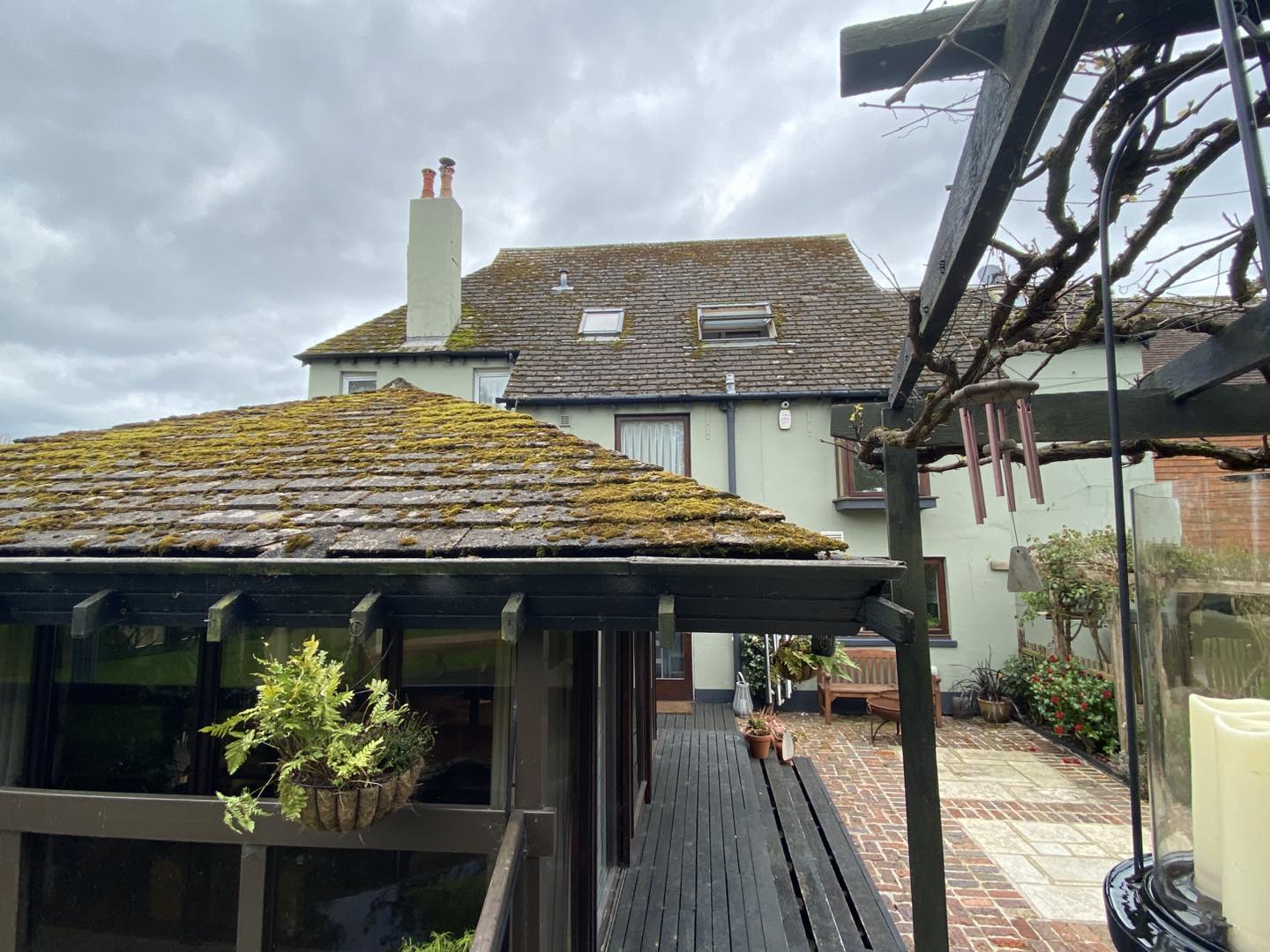
Our softwash work is covered by full public liability insurance, and because the method carries no meaningful mechanical risk to the roof surface, the question of damage simply doesn’t arise.
The Honest Summary
If you’re researching roof cleaning methods because you’re trying to make an informed decision before booking someone, here’s what I’d want you to take away from this.
Pressure washing produces impressive immediate results. It’s popular because it looks good and because the equipment is accessible and familiar. For roof cleaning specifically, the mechanics of the method work against what you’re actually trying to achieve: a clean, undamaged roof that stays that way for as long as possible.
Softwash treats the cause of the problem rather than the appearance of it. It’s slower to show its full results. It requires the right knowledge of dilution rates, application techniques, and roof materials. Done correctly with the right solution, by someone who understands what they’re doing, it is the best method in almost every circumstance.
A Word on Choosing a Roof Cleaner
The method matters, but so does the person applying it.
Whoever you book should be able to tell you clearly which method they’re using and why it suits your specific roof. They should be able to explain the chemical they’re applying, how it works, and how they’ll protect your garden and any sensitive areas during treatment. They should carry public liability insurance and be willing to confirm it. They should give you a straight quote based on looking at your property, not a price plucked from a standard table.
If the answer to any of those questions is vague, that’s worth knowing before the work starts.
Talk to Us About Your Roof
MPowell Cleaning Services has been cleaning roofs across Bournemouth, Poole, Christchurch, Ferndown, Wimborne, Ringwood, and the surrounding areas since 2013. Every job starts with an honest assessment of your roof and a clear explanation of what we’re going to do and why.
Call Martin directly: 07443-490533
We typically respond the same day, and we can usually get out for a no-obligation look within the week.