Living by the sea in Bournemouth has its perks, but our coastal climate does place extra demands on exterior surfaces. Over the years, we’ve worked on hundreds of local properties and we’ve noticed that roofs, driveways and patios here age differently compared to those further inland.
We wanted to put together something useful for homeowners who are curious about what the sea air actually does to their property, and what can be done about it.
Salt, moisture and mild winters
Three things combine to make Bournemouth’s climate particularly challenging for exterior surfaces.
The first is airborne salt. When waves break along the coastline, tiny droplets of seawater become suspended in the air and travel inland with the wind. These droplets eventually settle on roofs, driveways, patios, fences and anything else exposed to the open air. Properties within two miles of the seafront receive the heaviest deposits, but measurable salt levels have been recorded several miles further inland on windy days.
The second factor is humidity. Bournemouth sits right beside the English Channel, and this keeps moisture levels in the air consistently high throughout much of the year. Surfaces that would dry within a few hours in an inland town like Salisbury often stay damp for much longer here.
The third element is our relatively mild winter. Temperatures in Bournemouth rarely drop low enough to produce hard frosts that last more than a day or two. This matters because freezing conditions kill off algae, moss spores and lichen during winter months. Without that natural die-off, biological growth continues accumulating year after year.
When salt, humidity and mild temperatures work together, they create an environment where exterior surfaces become colonised by organic growth much faster than they would elsewhere.
What happens to roofs
Roof tiles in coastal areas face two distinct challenges.
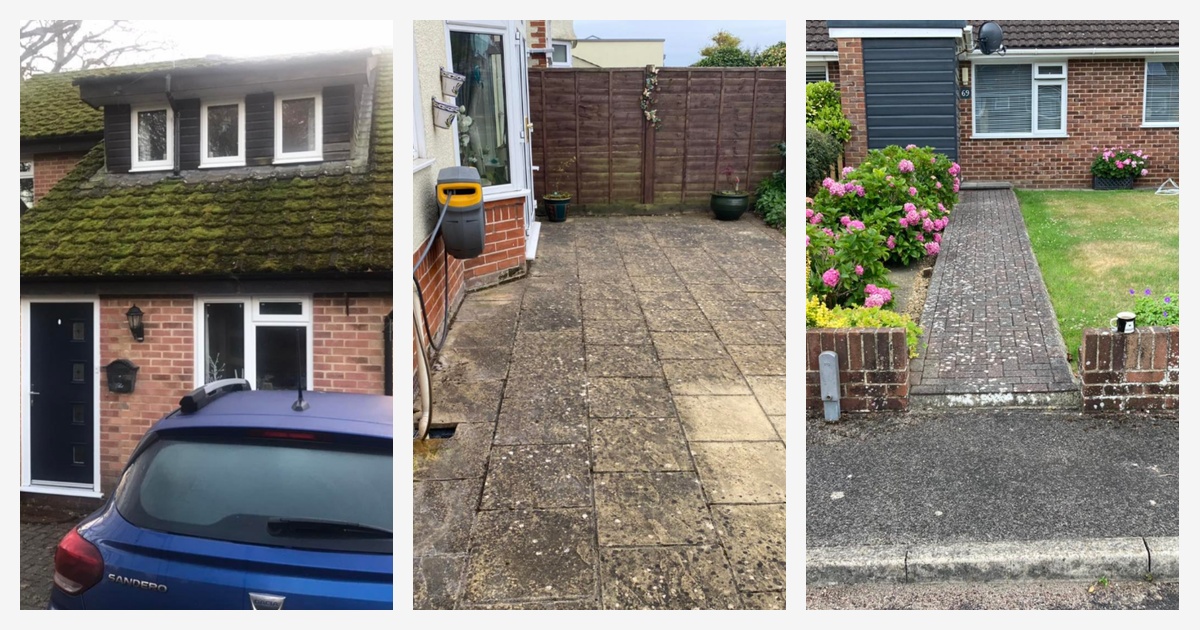
Biological growth is the more visible one. Algae produces those dark streaks that run down roof slopes after a few years. Moss establishes itself in gaps between tiles and along edges where moisture collects. Lichen, which is a combination of algae and fungus, forms pale grey or yellowish crusty patches that bond tightly to tile surfaces.
All three of these organisms thrive in damp conditions. The persistent humidity means they have ideal growing conditions for most of the year. And because winters in Bournemouth stay mild, established colonies survive from one year to the next rather than dying back.
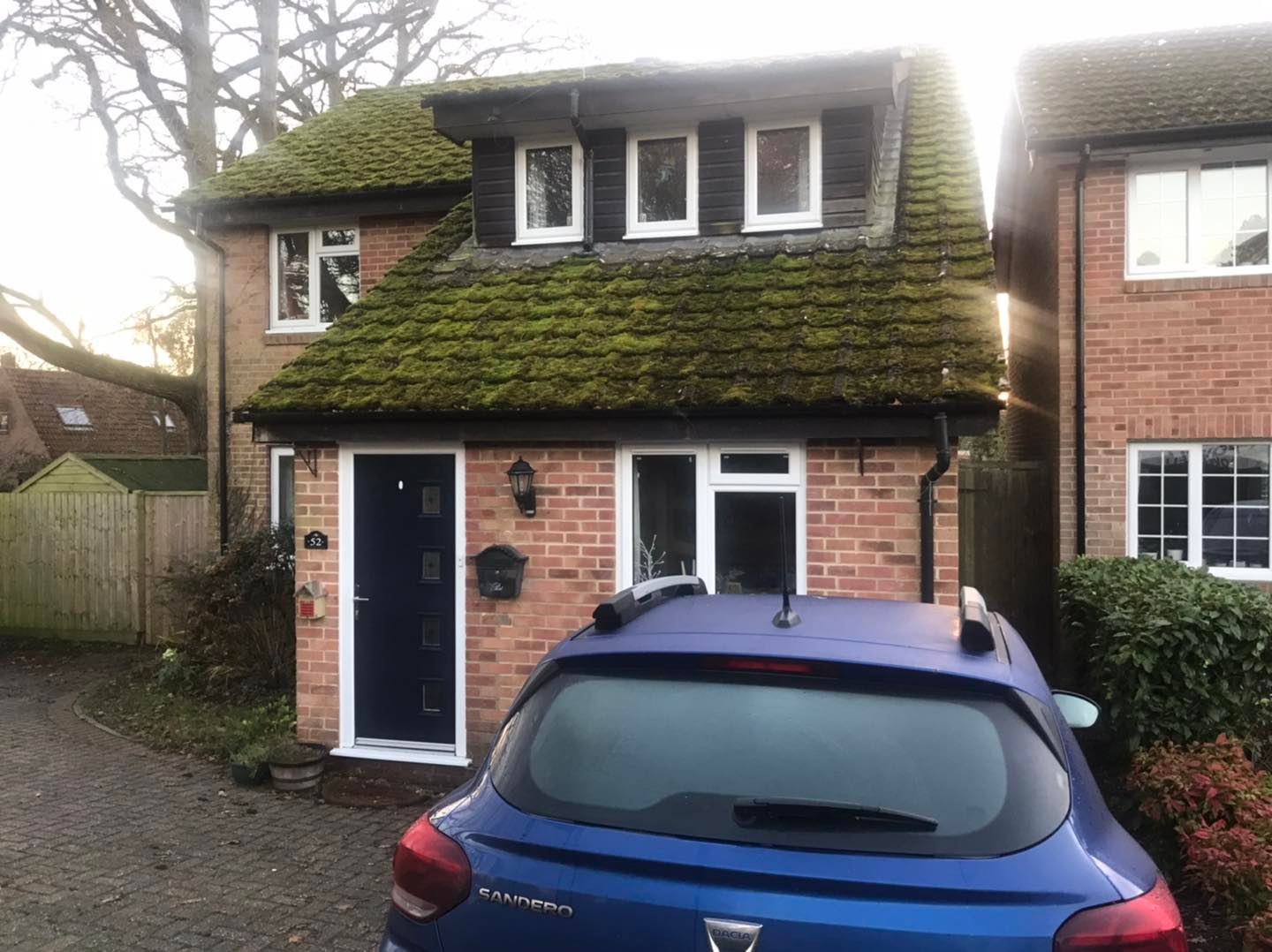
Moss causes the most practical problems. As it grows thicker, it works its way beneath tile edges and into gaps. This can lift tiles slightly and create pathways for rainwater to penetrate into the roof space below. We’ve seen properties where water damage to roof timbers and bedroom ceilings traced back to moss growth that had gone unaddressed for several years.
Lichen causes slower but more permanent damage. It produces mild acids as part of its metabolism. And over many years, these acids gradually dissolve the surface layer of tiles. Concrete tiles are more vulnerable to this than clay tiles. On neglected roofs, we sometimes find tiles that have become soft and powdery on the surface due to decades of lichen growth.
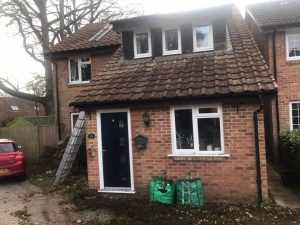
The second challenge is corrosion of metal components. Roof flashings, fixing nails, clips and brackets all suffer from accelerated rusting in salty coastal air. Galvanised coatings that would last 30 years inland may begin failing after 15 years on a property near the Bournemouth seafront.
On this topic: protecting your roof through colder months.
What happens to patios
Natural stone patios in Bournemouth often develop black spot, which is a fungal growth that embeds itself into porous stone like sandstone and limestone. The spores land on damp stone surfaces and send root-like structures down into the pores. This makes black spot very difficult to remove compared to surface algae, and if left for years it can permanently discolour the stone.
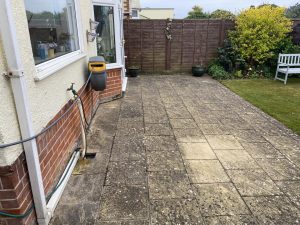
Porcelain and ceramic patios resist biological growth better than natural stone because they’re much less porous. But they still develop a thin biofilm layer in damp conditions that makes them slippery underfoot.
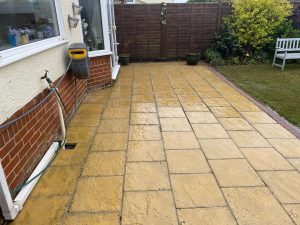
Pointing and grouting between patio slabs deteriorates faster in coastal areas. The combination of salt exposure and constant damp weakens cement-based mortars, causing them to crack and crumble. Once pointing begins to fail, water gets beneath the slabs and can undermine the sub-base, leading to movement and instability.
What happens to driveways
Driveways face different problems depending on their construction.
Block paving commonly develops white, powdery deposits called efflorescence. This happens when moisture moves through the blocks and evaporates at the surface, leaving behind dissolved mineral salts. Coastal areas see more efflorescence because the salt content in the air adds to the natural salts already present in the paving materials. Efflorescence looks unsightly but washes away fairly easily and doesn’t cause structural damage.
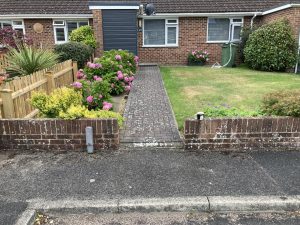
The more serious issue on block paving is algae and the black biofilm that develops on surfaces exposed to moisture. This coating builds up gradually and becomes extremely slippery when wet. We’ve cleaned driveways where homeowners mentioned they’d had near-misses with slipping, particularly during autumn and winter. Worth a read: our guide on keeping up with paving in colder months.
Concrete driveways suffer from a process known as salt crystallisation damage. Salt dissolved in moisture is absorbed into the tiny pores of concrete. When the moisture evaporates, salt crystals form inside these pores. As the crystals grow, they exert pressure that causes micro-fractures in the concrete. Over many cycles of wetting and drying, these fractures accumulate and the surface begins to flake and pit.
This type of damage is significantly more common in coastal areas than inland. And it progresses faster on older concrete that has become more porous with age.
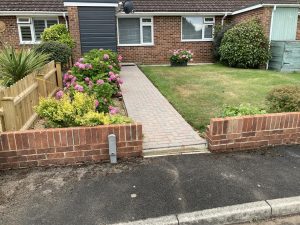
Distance from the sea
We’ve noticed that the severity of these problems does relate to how close a property sits to the coastline, though the relationship isn’t straightforward.
Properties in Southbourne, Boscombe and along the seafront generally need more frequent maintenance than those in Winton, Moordown or Charminster. But there are exceptions. A heavily shaded property several miles inland can develop worse moss problems than an exposed property near the beach, simply because shade keeps surfaces damp for longer.
Properties on higher ground benefit from better air circulation and tend to dry out more quickly after rain. Properties in low-lying areas or sheltered valleys retain moisture longer and often show heavier biological growth.
The type and age of materials also comes in equation. Older, more porous roof tiles and paving absorb more moisture and support more growth than newer, denser materials.
Practical steps for homeowners
Regular inspection is worthwhile. Checking your roof from ground level every few months helps you notice moss or algae buildup before it becomes severe. Walking your driveway and patio after rain shows you where water pools and where surfaces have become slippery.
Keeping gutters clear prevents overflow that creates persistently damp patches on walls and paving below.
Trimming back trees and shrubs that shade exterior surfaces allows more sunlight to reach them and helps them dry out faster. This alone can make a noticeable difference to how quickly biological growth develops.
Cleaning surfaces before growth becomes heavy makes the work easier and produces better results. Thick, established moss is harder to remove than light, recent growth. Lichen that has been present for many years leaves more permanent marks than lichen caught early.
Protective treatments applied after cleaning can extend the interval before regrowth appears. These treatments are particularly worthwhile for porous natural stone and older concrete tiles that would otherwise recolonise quickly.
Owning a home near the coast means a bit of extra upkeep, but that’s a fair trade for the lifestyle Bournemouth offers. Once you understand how the sea air affects exterior surfaces, spotting early signs of trouble becomes second nature. And catching things early is always easier on the wallet than dealing with years of accumulated damage.
Thanks for reading. If you have questions about your own property, we’re always happy to help where we can.