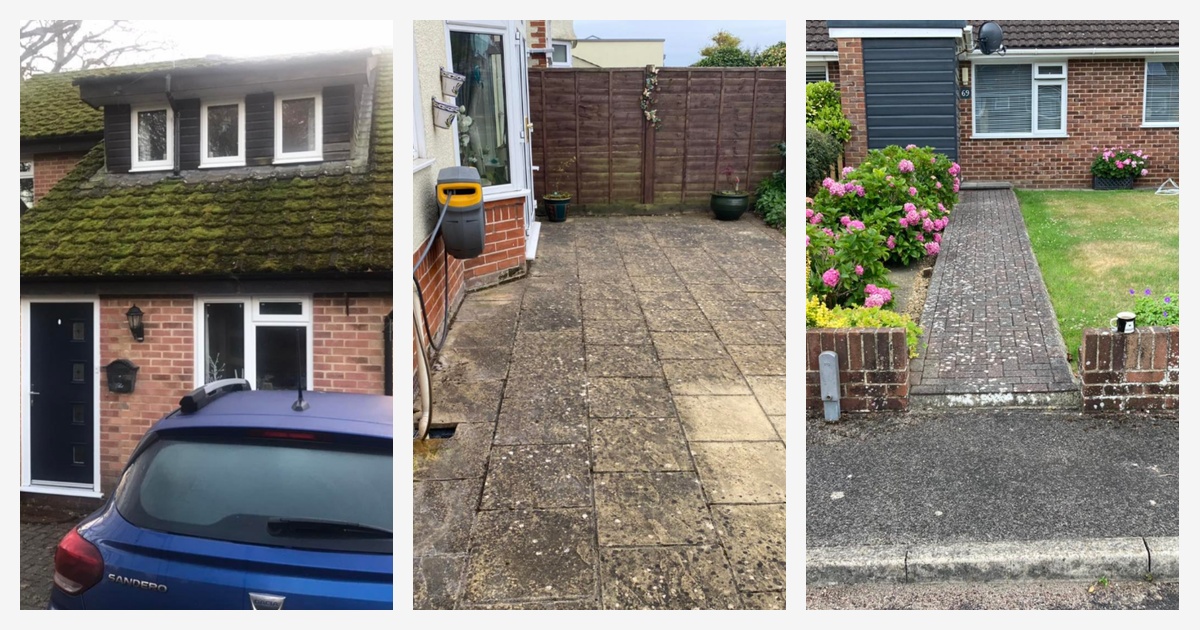
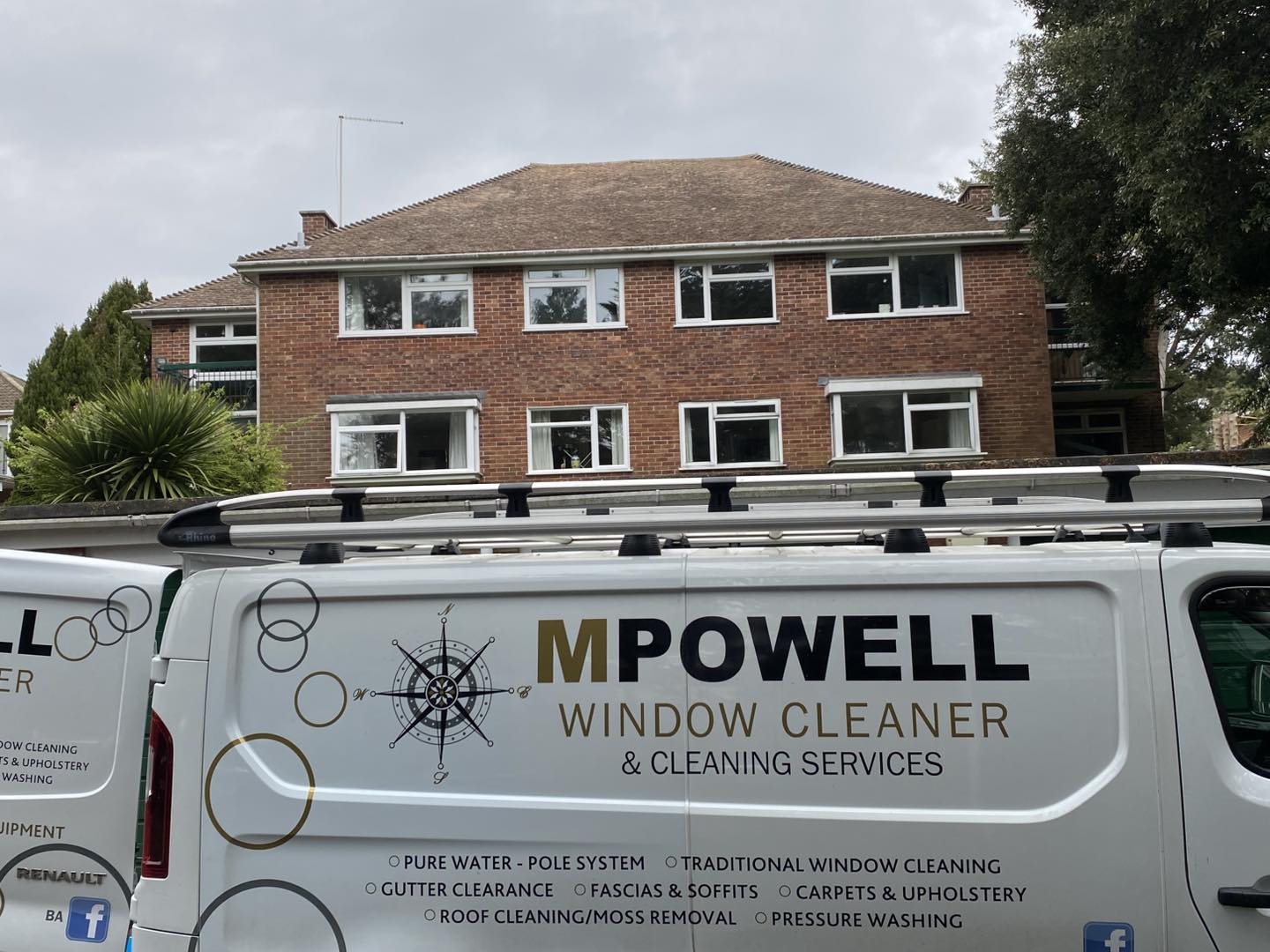
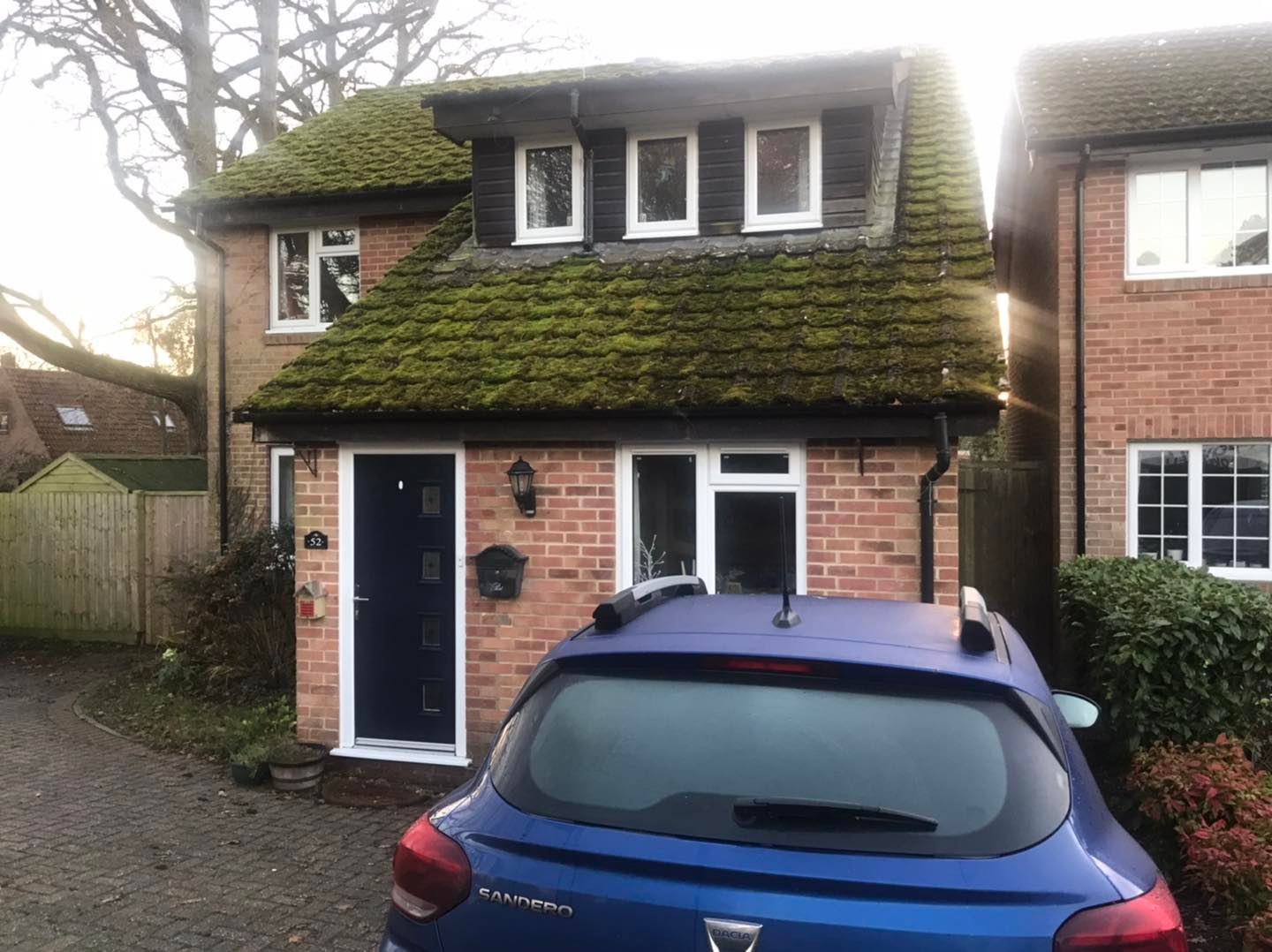
A homeowner from Southbourne got in touch with us last autumn. He had been putting off calling anyone about his roof for years. Partly because of cost. Partly because he had heard stories about cleaners causing more damage than the moss itself.
We understood his hesitation. Roofs are expensive to repair and easy to damage if you approach them carelessly.
The Roof
The property was a 1980s family home about a few miles from the coast. It had concrete interlocking tiles and a large oak tree on the north side providing year-round shade.
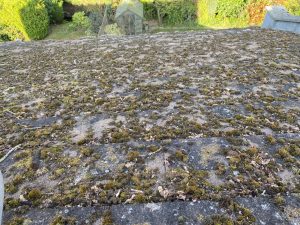
The combination of coastal air, tree cover, and time had created heavy moss growth across most of the roof surface. The north-facing slope was almost entirely green. Thick patches had built up between tiles and along the edges. You could not tell what colour the tiles were supposed to be underneath all that growth.
The homeowner had bought the house eighteen years earlier. He showed us old photos from back then. The tiles used to be a warm reddish-brown. Now everything looked grey and tired.
He mentioned trying shop-bought moss killer a few times over the years. It helped briefly, but the moss always returned within months. Each time it seemed to come back thicker than before.
What We Found During the Inspection
We spent a good amount of time studying the roof before giving any quote. Rushing an inspection helps nobody. A few things stood out.
The moss had grown thick enough in places to start lifting tile edges. This happens gradually. Moss pushes its way underneath, moisture follows, and then winter frost does the rest. We found two tiles that had already cracked from this process. They were not leaking yet, but they would have caused problems eventually.
The gutters were blocked with years of decomposed moss and leaf debris. Water had been spilling over the front edge during heavy rain and running down the fascia. Some early rot had started on the soffit boards.
We also noticed a white residue across many tiles, mixed in with the algae staining. This is common on properties close to the Bournemouth coast. Salt from sea air settles on roof surfaces and creates a layer that holds moisture against the tiles. It speeds up moss growth and makes cleaning a bit more involved.
We explained all of this before agreeing on any price. It felt important that the homeowner understood what we were dealing with and why.
How We Approached the Clean
We scheduled the work for a dry spell in late October. Weather matters for this kind of job. You need stable conditions for safety, and biocide treatments need time to soak in before any rain arrives.
We removed most of the moss by hand using brushes and moss removal scrapers. This is slower than pressure washing, but we have good reasons for doing it this way.
Pressure washing looks impressive. Moss blasts off and tiles look clean within seconds. But that force comes at a cost. High-pressure water strips the protective layer from concrete tiles. It pushes water into gaps where it should never go. It can crack tiles that have become brittle with age. And because the tile surface ends up rougher and more porous afterwards, moss often returns faster than before.
We have seen roofs that needed replacing within a few years of aggressive pressure washing. The owners thought they were looking after their property. The opposite was true.
So we took our time with manual removal. On this particular roof, we spent a good while clearing moss and debris. Four heavy bags worth came off. The oak tree had also dropped years of twigs, seeds, and small branches into the valleys and around the chimney flashing.
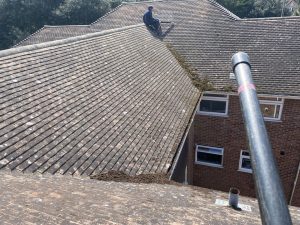
After clearing everything, we used a soft wash system to rinse the tiles. Low pressure, high water volume. It cleans effectively without forcing anything where it should not go.
We then applied a biocide treatment across the whole roof. This kills moss spores, algae, and lichen at the root. It keeps working over the following weeks as rain reactivates it. The products we use are commercial grade and far more effective than retail alternatives.
We also cleared out the gutters and flushed the downpipes. One downpipe had a partial blockage a couple of feet down that would have caused trouble during the next heavy rain.
Something We Had to Work Around
One section of the roof had tiles that felt different. Slightly softer. They were original 1980s tiles, but this batch seemed more fragile than the rest. Perhaps a manufacturing variation from that era.
We adjusted our approach for that area. Used crawl boards to spread weight more evenly. Took extra care with brushing and left a few stubborn marks rather than risk cracking those tiles.
The homeowner could have asked for a perfect finish across every inch. But we explained the situation honestly, and he agreed that protecting the structure mattered more than cosmetic perfection in one small corner. We appreciated his understanding on that.
A Few Months Later
We checked back on the property about four months after the clean. The biocide had continued working. Tiles that looked a bit patchy right after cleaning had settled into a consistent reddish-brown colour.
The homeowner told us a neighbour had asked if he replaced the roof. He had not. It was the same roof, but properly cleaned for the first time in a long while.
He also mentioned that his home insurance company requested roof photos during a policy renewal, and they seemed pleased with the condition. We cannot say that it will happen for everyone, but it was a welcome outcome for him.
Things We Have Learned About Roofs in This Area
Working on properties around Bournemouth over the years, we have noticed a few patterns.
Homes within a couple of miles of the seafront tend to develop roof problems sooner than those further inland. The salt in the air is invisible, but it settles on surfaces and traps moisture. That speeds up moss and algae growth considerably.
Properties with mature trees nearby, especially on the north side, will almost always struggle with moss at some point. Shade and organic debris create ideal conditions. Trimming branches back can help, though we understand that many people do not want to lose established trees.
Older concrete tiles, particularly from the 1970s and 1980s, need more careful handling. They were manufactured differently. The surface coating was often thinner. Harsh cleaning methods can shorten their remaining lifespan significantly.
And neglected moss does not stay the same. It grows slowly at first, then picks up pace as conditions become more favourable. A roof with minor patches today can be in serious trouble within three or four years if nothing is done.
More on this: Is roof cleaning at all worth it?
If Your Roof Looks Similar
We were glad we could help with this Southbourne property. The roof looks much healthier now, and more importantly, it is better protected going forward.
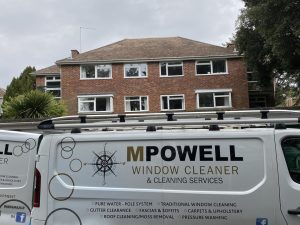
We’ve been providing professional roof cleaning services across Bournemouth, Christchurch, Poole, and the wider Dorset area since 2013. If your roof is showing similar signs, you are welcome to contact MPowell Cleaning Services. We are happy to come and have a look, give an honest opinion on what your roof needs, and explain the options available.
Sometimes that means a full clean. Sometimes a simple treatment is enough. And sometimes it means leaving things alone for another year because the situation is not serious enough to address yet.
We try to recommend what makes sense for each roof, rather than pushing work that is not needed. Call us on 07443-490533.