We’ve been cleaning roofs in Bournemouth for over 10+ years now, and we get asked this question more than any other. Usually it comes from someone standing in their front garden, looking up at their roof with that uncertain expression, wondering if they’re about to waste a few hundred quid on something that doesn’t really matter.
So here’s our honest take, and we promise to tell you when it’s worth it and when you should save your money.
Boring Answer and the Real Answer
The boring answer is yes. Roof cleaning in Bournemouth is worth it, because it protects your tiles and extends your roof’s lifespan. You’ve probably read that on fifteen other websites already.
The real answer is more complicated.
We’ve seen roofs in Southbourne absolutely covered in moss that have held up fine for decades. We’ve also seen roofs in Winton with moderate growth where tiles were already cracking and water was getting into the loft space. The difference usually comes down to three things:
- what your roof is made of,
- how it was installed, and
- honestly, a bit of luck.
When Roof Cleaning is Absolutely Worth It
Your tiles are concrete, and your roof faces north or sits under trees.
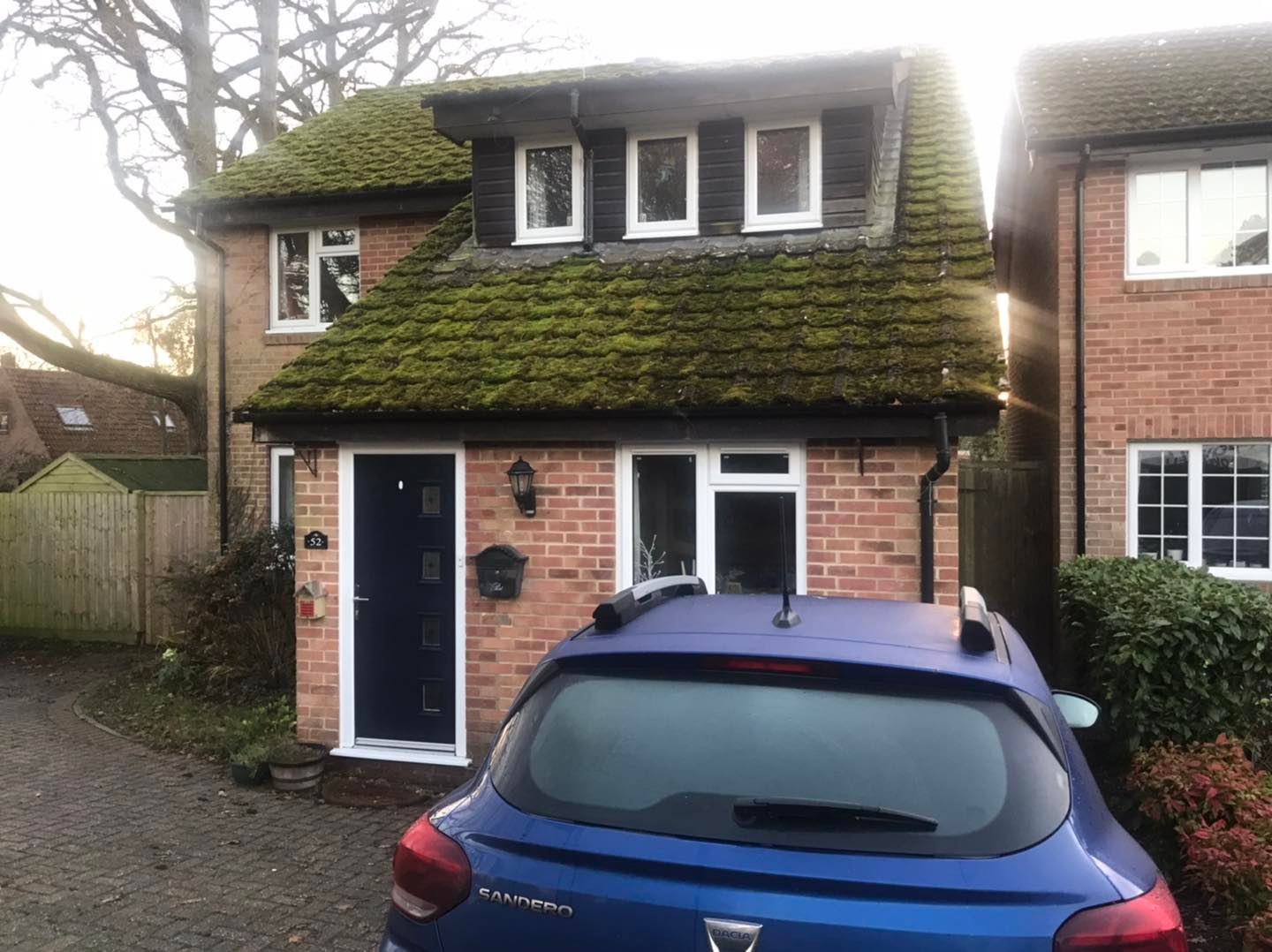
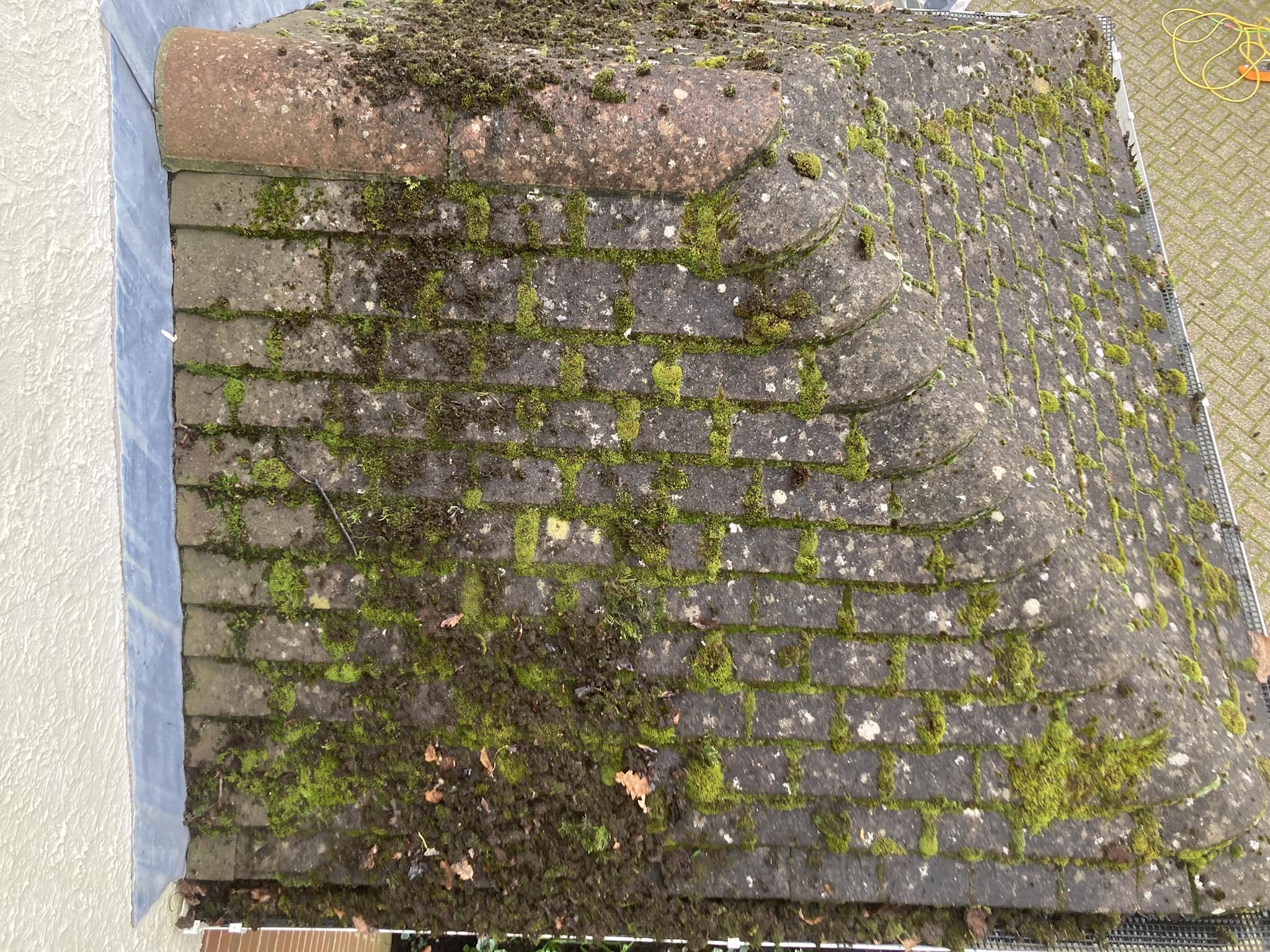
Concrete tiles are porous. They soak up moisture like a biscuit dunked in tea. When moss grows on them, it holds even more water against the surface. Come January when we get cold snaps, that water freezes, expands, and starts breaking down the tile from the inside out.
We worked on a house in Charminster Road, Bournemouth where the homeowner had ignored their north-facing roof section for many years. The moss was a good three inches thick in places. When we cleared it, we found nine cracked tiles and two that had completely split in half.
You’re planning to sell in the next couple of years.
A black-streaked, mossy roof makes the whole house look tired and neglected. It plants a seed of doubt before anyone even steps through the front door.
Surveyors absolutely flag heavy moss growth in their reports. It goes in as a maintenance issue, sometimes gets flagged as requiring further investigation, and suddenly your buyer is nervous and looking for reasons to negotiate the price down.
We’ve had customers book a clean specifically because their estate agent recommended it before listing. Smart move, in our opinion.
Water is pooling or your gutters keep blocking.
Moss doesn’t stay on your roof forever. It dies, breaks apart, and washes into your gutters. Mix that with leaves and general debris, and you’ve got blocked drainage.
Now, a blocked gutter isn’t the end of the world. But when water overflows instead of draining properly, it runs down your walls, soaks into brickwork, and can eventually cause damp problems inside. We’ve seen fascia boards rotted through because overflowing gutters kept them permanently wet for years.
If you’re clearing your gutters twice a year and they’re still filling up with green muck, the problem is probably up on your roof.
When You Can Probably Wait
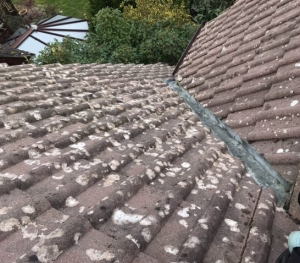
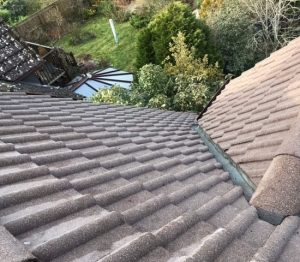
Your roof is natural slate and the growth is mostly lichen.
Slate is tough stuff. It’s been used on British roofs for centuries precisely because it handles our weather so well. Lichen grows slowly on slate and doesn’t cause the same moisture problems you get with moss on concrete.
We are not saying slate roofs never need cleaning. But if you’ve got a slate roof with some lichen patches and no obvious issues, you’re not in urgent territory. Keep an eye on it and reassess in a year or two.
The growth is light and your roof is less than ten years old.
Modern tiles often come with protective coatings that resist algae and moss. If your roof is relatively new and showing minor green patches, a preventative biocide treatment might be all you need. This costs less than a full clean and can keep things under control for another few years.
You’re genuinely struggling financially right now.
We run a business, and we’d love everyone to book a roof clean tomorrow. But we are also realistic. If money is tight and you’re choosing between roof cleaning and fixing your boiler, fix your boiler. Your roof can wait another year in most cases. It’s been up there getting rained on for decades already.
The Bournemouth Problem
We do have specific conditions here that make roof contamination worse than in other parts of the country.
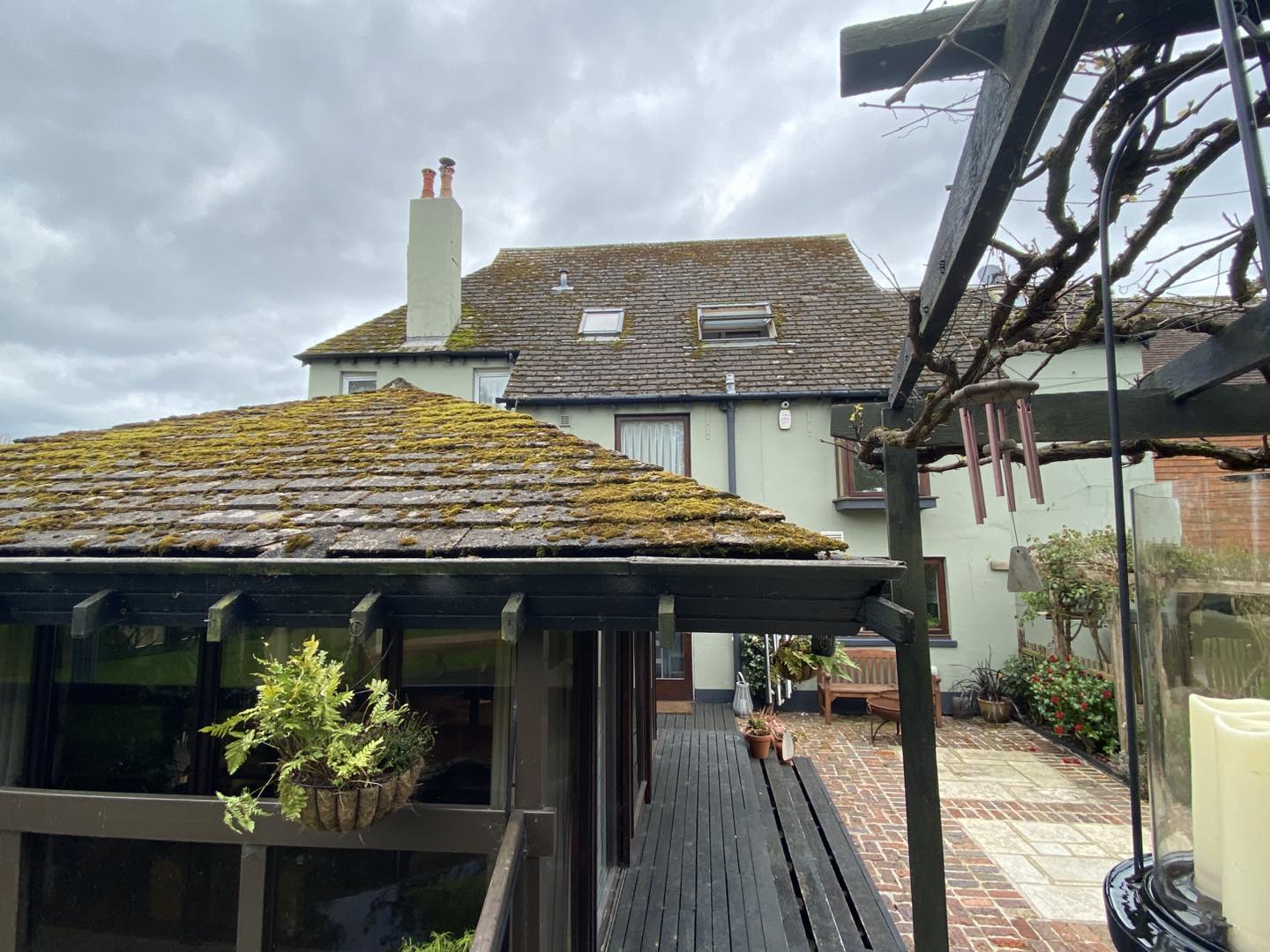
The sea air holds moisture. Even on days that feel dry, there’s salt and humidity blowing in off the Channel. This keeps roof surfaces damp for longer, which is exactly what moss and algae need to spread.
We notice clear patterns across town. Properties up in Talbot Woods, surrounded by trees and shaded for much of the day, get heavy moss growth. Seafront properties in Boscombe and Southbourne see more algae streaking because of the salt exposure. Houses on south-facing slopes with good sun exposure often stay cleaner for longer.
Your mileage will vary depending on where exactly you live and what surrounds your home.
What Our Roof Cleaning Process Involves
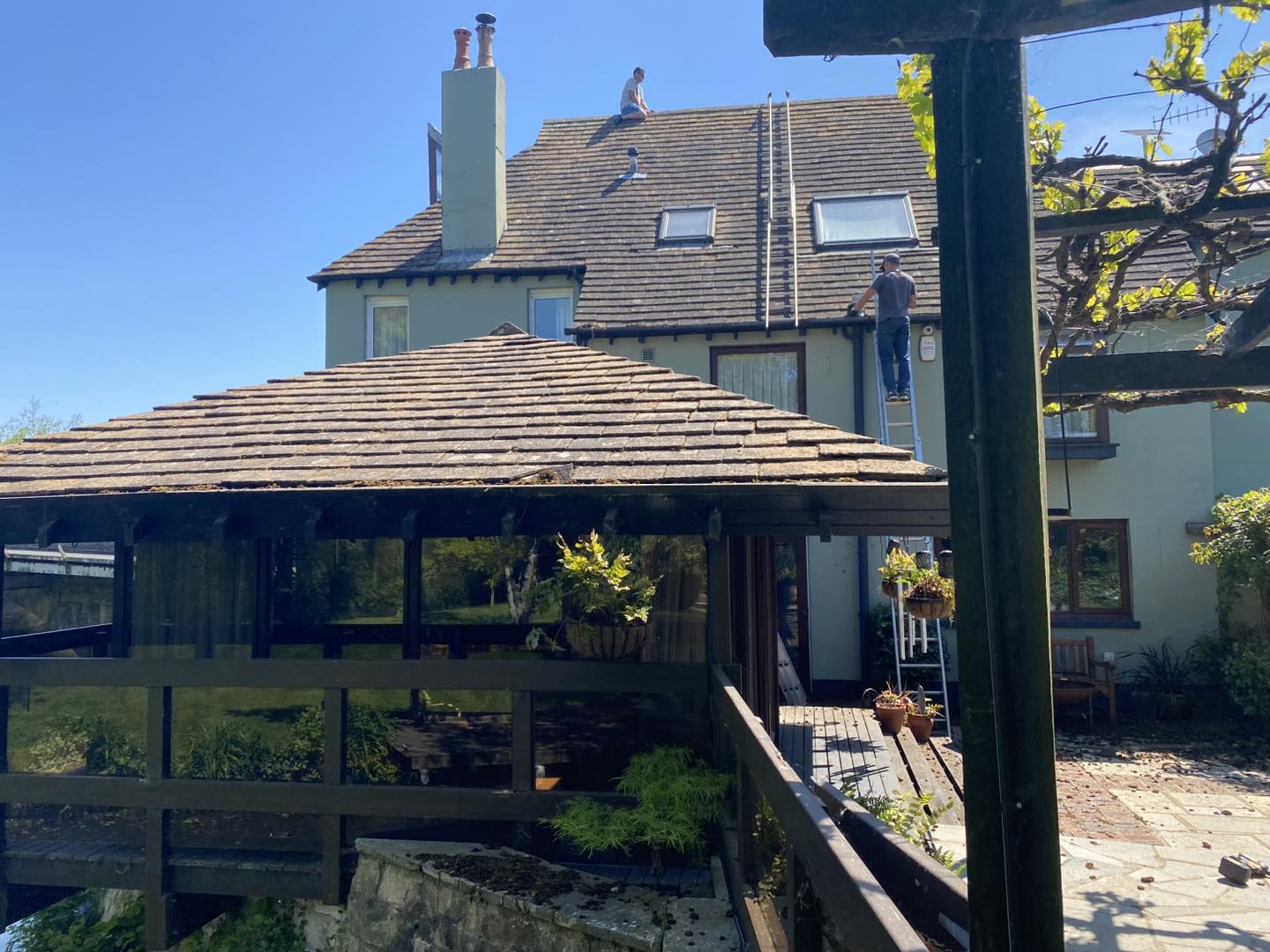
Since you might not know what you’re paying for, let us walk you through how we approach it.
First, we look at your roof properly.
- What material are the tiles?
- How steep is the pitch?
- Where’s the moss concentrated?
- Are there any cracked or slipped tiles we can see from ground level?
This tells us which cleaning method to use and what pressure settings are safe.
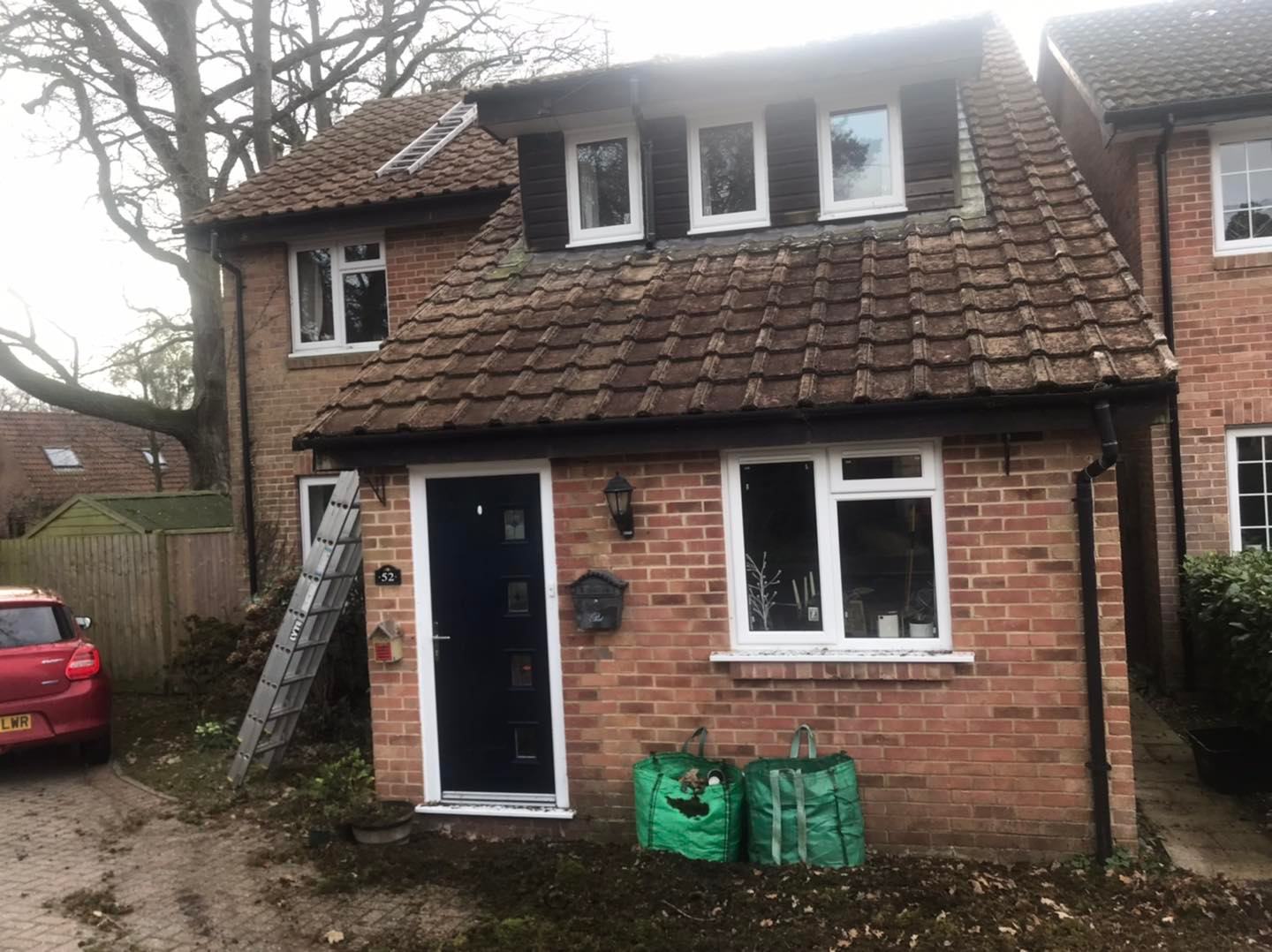
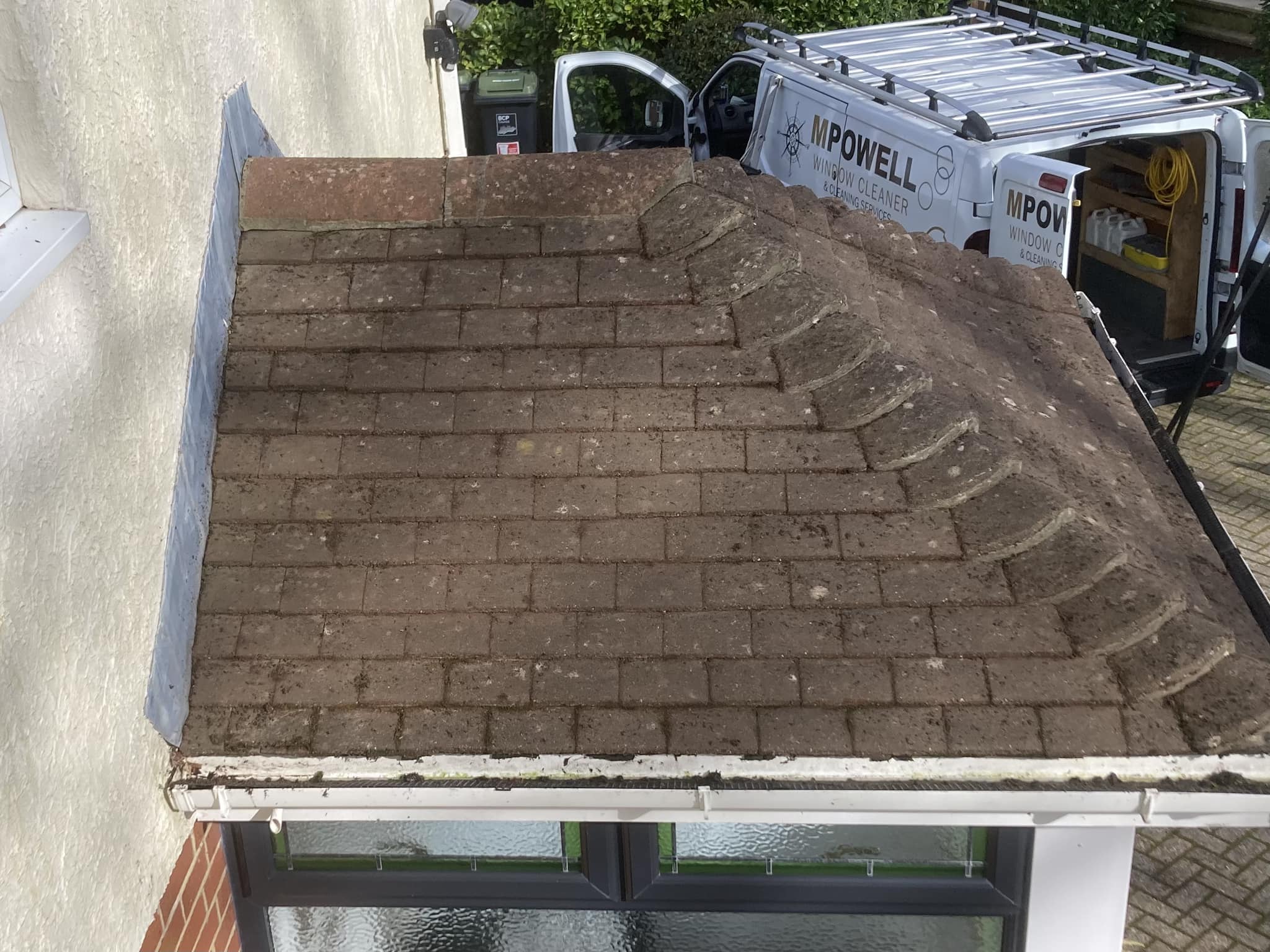
For most residential roofs in Bournemouth, we use a soft wash system. This means lower-pressure water combined with a biocide solution that kills moss and algae at the root. High-pressure washing can damage tiles, strip their protective surface, and force water underneath where it doesn’t belong. We avoid that.
The actual cleaning takes a few hours for an average semi-detached house. Larger properties or heavily contaminated roofs take longer. We clear the debris, treat the surface, and check the gutters while we’re up there.
After treatment, some of the dead moss washes away naturally with rainfall over the following weeks. This is normal and expected.
Roof Cleaning Costs in Bournemouth
We can’t give you an exact figure without seeing your roof, but for a typical three-bedroom house in Bournemouth, you’re looking at somewhere between £250 and £600 for a proper soft wash clean with biocide treatment.
Prices go up for larger properties, difficult access, steep pitches, or roofs that haven’t been touched in years and need extensive work.
Prices come down for smaller bungalows, easy access, and roofs with lighter contamination.
Anyone quoting £150 for a full roof clean is either cutting serious corners or planning to blast your tiles with a pressure washer at settings that will cause damage. Cheap rarely means good value in this trade.
Our Honest Recommendation
Get up in your loft with a torch. Look at the underside of your roof. Are the timbers dry? Any signs of water staining or damp patches? Does it smell musty?
Then go outside and really look at your roof. Not a quick glance, but a proper look. Is the moss thick and established, or light patches here and there? Can you see any cracked, slipped, or damaged tiles? Are there bare patches where granules have worn away?
If your loft looks dry and your roof shows only minor growth, you’ve probably got time. Monitor it and plan for a clean in the next year or two before things get worse.
If you’re seeing heavy moss buildup, visible tile damage, or any signs of moisture getting through, don’t wait. The longer you leave it, the more expensive the eventual fix becomes. And if you’re selling your house, get it cleaned regardless. The return on that investment shows up in buyer interest and survey outcomes.
One Last Thing
We’ve tried to be straight with you in this post because we think homeowners deserve honest information rather than scare tactics. Your roof probably isn’t about to collapse. But it is slowly deteriorating if organic growth has taken hold, and dealing with it sooner costs less than dealing with it later.
If you want a proper assessment of your roof, give us a call on 07443-490533 or email martinpcleaning@gmail.com. We’ll tell you honestly what we think, even if that means advising you to wait.